Best Budget Tyre Brands in the UK
Yes, there are budget tyre brands worth buying in the UK. The ones we fit most days are Maxxis, Riken, Landsail and Jinyu. Three rules matter more than the name on the sidewall. Match the tyre to your annual mileage: budget suits town driving and low mileage, while heavy motorway use earns a mid-range or premium tyre. Check the EU tyre label, especially the wet grip grade. And a brand-new budget tyre is a safer buy than a worn premium tyre or a part-worn of unknown history.
What Budget tyre actually means
Budget is a price tier, not a safety tier. Every new tyre sold in the UK must meet the same legal standards before it goes on sale, and Halfords and tyres.co.uk both say plainly that budget tyres are safe to drive on.
The saving comes from what happens before the tyre is made. Premium manufacturers pour money into research, rubber compounds and testing; budget makers spend far less. The trade-offs usually show up in four places:
- Wet braking: stopping distances on a wet road tend to be longer.
- Tread life: simpler compounds can wear out sooner.
- Noise and comfort: expect a bit more road roar on coarse surfaces.
- Consistency: quality varies more between budget brands, and sometimes between models from the same brand.
None of that makes a budget tyre a hazard. You’re accepting a smaller safety margin and a shorter lifespan in return for a lower price today. Whether that’s a good deal depends on how and where you drive.
Budget vs mid-range vs premium, honestly
Most UK tyres fit into three price bands. F1 Autocentres puts them at roughly £40–60 per tyre for budget, £65–100 for mid-range and £100–400 for premium. Those are industry ranges, not our prices, and tyre size moves the figure a long way.
Tier |
Typical Price Per Tyre (F1 Autocentres) |
Example Brands |
What the Money Buys |
|---|---|---|---|
| Budget | £40–60 | Landsail, Riken, Jinyu, Autogreen, Rovelo | A new, legal tyre at the lowest outlay; shorter life and longer wet stops. |
| Mid-range | £65–100 | Hankook, Kumho, Falken, Toyo, Nexen, Avon | Much of the premium performance for noticeably less. |
| Premium | £100–400 | Michelin, Continental, Bridgestone, Goodyear, Pirelli, Dunlop | The best wet grip, longest tread life and most refinement. |
Mid-range is where most UK drivers get the strongest return, and F1 Autocentres calls it the best value for money. That tier is wider than many people think: Hankook, Kumho, Falken, Toyo, Yokohama, Avon, Uniroyal, GT Radial, Nexen, Sailun, Cooper, Firestone, Davanti and Kleber all sit there.
Premium tyres earn their price over distance. According to F1 Autocentres, they can last up to 20,000 miles longer, which closes much of the gap for anyone covering big mileage. The saving from going budget also depends on the car. First Stop estimates a budget tyre costs about £15–30 less than a premium one on a small car, and roughly £50–70 less on a family estate. Across four tyres on a bigger car, that’s a saving worth weighing carefully rather than a reason to pick the cheapest line on the quote.
Other budget brands you'll see in the UK
Shop around and you’ll meet plenty of other budget names on UK retailer listings, including National, Halfords, Just Tyres and Tyre Shopper:
- Autogreen, Rovelo, Nankang and Triangle
- Churchill, Infinity, RoadX and Dynamo
- Mazzini, Double Coin, Event and Hifly
- Goodride, Tigar, Admiral and Sunny
- Wanli and Rotalla
Some of these are mainly sold through online retailers, so a high-street fitter may not keep them in stock, and availability in your exact size can change from month to month. We’re not going to rank them, because a brand name tells you less than the specific tyre model does. Two tyres from the same budget maker can behave quite differently, especially in the wet.
If one of these is on your quote, judge that exact tyre rather than the badge. Read its EU label, look up the model on an independent review site such as Tyre Reviews, and confirm the size, load index and speed rating match your car. Any brand that passes those checks for your driving is a reasonable buy; one that fails them isn’t, however cheap it looks.
Be cautious with any online listing that hides the full EU label or doesn’t name the exact tyre model. A reputable seller shows both, because those two details are what let you compare one cheap tyre with another.
The classification problem: brands that aren't actually budget
Nexen, Kumho, Hankook, Falken, Toyo and Avon are mid-range brands, yet many of the pages ranking for this question list them as budget. Lindleys Autocentres puts Hankook, Firestone and Dunlop under “best budget”. Town Tyres lists Nexen as budget. Hometyre and a Medium affiliate article both place Hankook in premium, while another guide calls Falken and Kumho budget-friendly.
Even large chains slip up: National’s own page describes Rotalla, a budget brand, as premium. Drivers notice. Under one social media video ranking “four best budget brands”, a commenter pointed out that only Landsail was truly budget and the rest sat in mid-range territory.
This matters because a mislabelled tier skews the decision both ways. Drivers can end up paying mid-range money believing they’ve bought the cheapest safe option, or they write off a genuinely good mid-range tyre as “cheap” and skip it. Getting the tier right is the first step to comparing like with like.
When budget tyres are the right call and when they aren't
Budget tyres make sense when your driving doesn’t ask much of them. They’re a good match for:
- Low-mileage town driving: Hometyre suggests budget tyres are fine up to around 6,000–7,000 miles a year.
- A second car that mainly does short local trips.
- An older car where spending £400 on rubber doesn’t fit its value.
- Selling soon: Town Tyres points out that budget tyres make sense if the car is going within months.
- A tight month: Just Tyres notes budget tyres let you replace an illegal or damaged tyre now rather than waiting until payday.
Spend more if you cover high annual mileage, spend most of your time on motorways, drive a powerful or performance car, or rely on the car through winter. In those cases the longer tread life and shorter wet stopping of mid-range or premium tyres pay you back.
Not sure which side you fall on? Your past MOT certificates record the mileage each year, so a quick look at the gap between two tests tells you how far you really drive. That one number usually settles the question.
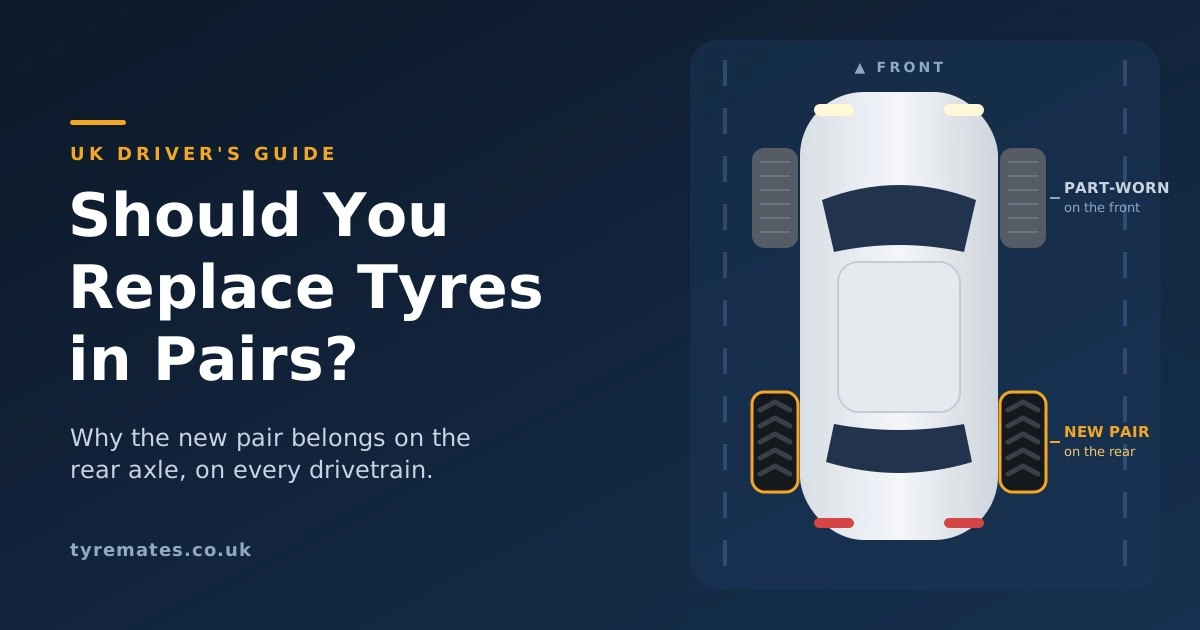
Whatever tier you choose, keep the tyres on each axle matched in brand, pattern and tread depth; our guide on replacing tyres in pairs explains why.
How to choose: the EU tyre label in 60 seconds
Every new car tyre sold in the UK carries a label grading three things:
- Fuel efficiency: A (best) to E (worst), driven by rolling resistance.
- Wet grip: A to E, the grade most closely tied to stopping on wet roads.
- External noise: shown in decibels with an A to C class.
Halfords advises looking past the price and checking the label, and always confirming the correct size, load index and speed rating for your vehicle. A brand name on its own isn’t a buying decision. Once the new tyres are on, TyreSafe’s monthly tyre checks for pressure, condition and tread depth will help them last as long as they should.
Compare wet grip first: two tyres at the same price can sit two or three grades apart. Noise matters more if you spend long stretches on the motorway, and fuel efficiency adds up over a year of driving.
Frequently Asked Questions
What are the best budget tyre brands in the UK?
There’s no single winner, because the specific tyre model matters more than the badge. The budget brands we fit most often are Maxxis, Riken, Landsail and Jinyu. Riken stands out for being part of the Michelin group. Whichever brand you pick, check the EU label’s wet grip grade first.
Are budget tyres safe?
Yes. Every new tyre sold in the UK has to meet the same legal safety standards, whatever it costs. The difference is margin rather than legality: budget tyres generally take longer to stop on wet roads and wear out sooner. Fitted correctly and kept at the right pressure, they’re safe for everyday driving.
Are budget tyres any good?
For the right driver, yes. They suit low mileage, local journeys, second cars and older vehicles well. They’re a weaker fit for long motorway commutes, powerful cars or heavy winter use, where mid-range tyres usually give better grip and last long enough to justify the extra spend.
How long do budget tyres last?
Just Tyres puts the average at 20,000–40,000 miles, though driving style, pressures, alignment and road surfaces all change the figure. Premium tyres can last noticeably longer. Whatever the brand, replace a tyre before it reaches the 1.6mm legal limit; many fitters recommend changing at 3mm.
Can you use budget tyres on the motorway?
Legally, yes, as long as they’re the correct size, load index and speed rating for your car. If most of your miles are motorway miles, though, mid-range or premium tyres are the better choice. They usually stop shorter in the wet and last longer at sustained speed.
Are budget tyres better than part-worn tyres?
In our view, yes. A new budget tyre has full tread, a known history and a manufacturer’s warranty. A part-worn tyre may hide damage you can’t see, and its shorter remaining tread often wipes out the saving. National Tyres says a new budget tyre is always better than a part-worn.